


Understanding Intersectionality
- Mutsa Katomeni

- Apr 19, 2021
- 3 min read
We live in a world where everything is not black and white, it’s not always an "either, or" situation. Something that can also be said about equality. In our efforts to promote equality, diversity and inclusion, various factors affect all these things interchangeably. Which is something that should be considered as opposed to following a specific narrative.
If there was a word to describe this, it would be intersectionality. Kimberlé Crenshaw, a law professor at Columbia and UCLA coined the term intersectionality more than 30 years ago.
She describes it as how certain aspects of who you are will increase your access to the good things or exposure to the bad things in life. An intersectional approach shows the way that people’s social identities such as race, gender, religion, physical appearance, nationality and class can overlap which creates a compounding experience of discrimination.
This is why people go out of their way to portray a certain image to the world to gain access to those good things. Women straighten their hair, dress a certain way, or even go as far as getting cosmetic surgery to alter their physical appearance, men do the same.
The term was meant to broaden the scope of feminism which at the time focused on the experiences of white middle-class women. The concept of intersectionality was a way to separate itself from white feminism by acknowledging that women have different experiences based on their identities such as being a woman of colour, immigrant woman or their social status. It rejects the need for people to compartmentalise as a way of simplifying equality.
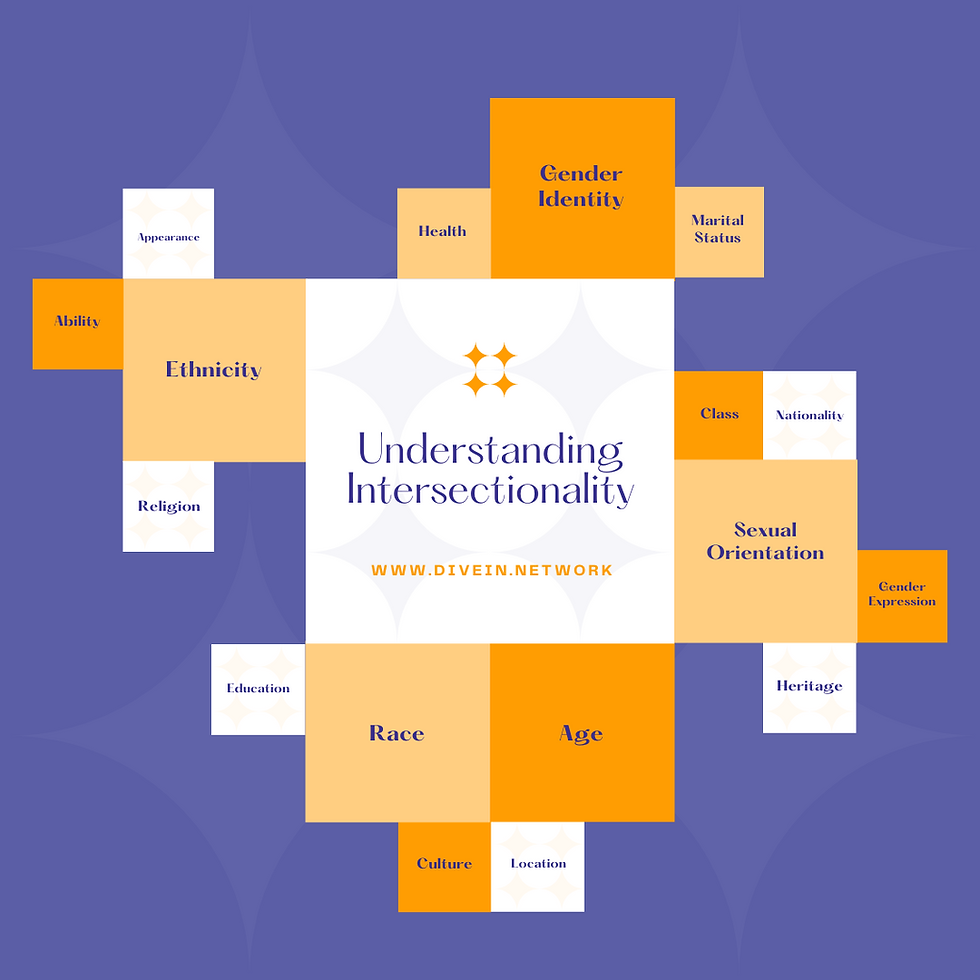
Which really puts things into perspective when you think about it. If you look beyond just gender equality, intersectionality makes you realise there are so many dimensions and layers to the types of discrimination people face. For example, a black gay man experiences discrimination differently from how a white gay man may experience discrimination. Or how a black neurodiverse woman may not even be considered when we talk about diversity and inclusion.
This is why it is important to use the intersectionality framework when trying to promote a diverse and inclusive workplace.
Below are two simple steps a company can take to use the intersectionality approach while addressing diversity and inclusion:
STEP 1: Broaden the scope of intersectionality
Look beyond the general ideas of diversity and inclusion. Typically companies like to address their gender gap in management positions which is a good thing but simultaneously what it does is make companies have a narrow focus and spend less time working on true diversification and inclusion.
Broadening the scope gives organisations the chance to do a full analysis and examine other areas they had no idea existed or paid zero attention to. The analysis can then be used as a guideline when creating a strategy to make sure you have an effective system in place.
STEP 2: Give various representatives a seat at the table
In today’s world, we now more than ever see the importance of having women sitting at the decision-making table. The same should be said about different diverse groups. It’s not enough to have just one section of a diverse population at the table.
Having representatives provides the opportunity to have open discussions with those who are underrepresented and get primary source information on how the company can do better to have an inclusive workplace. Though it is important to note that having a representative does not mean they speak on behalf of every individual in a specific social group. They serve as a starting point to encourage conversations with more people. The process is always a learning curve so be prepared to learn and really listen.
Comments